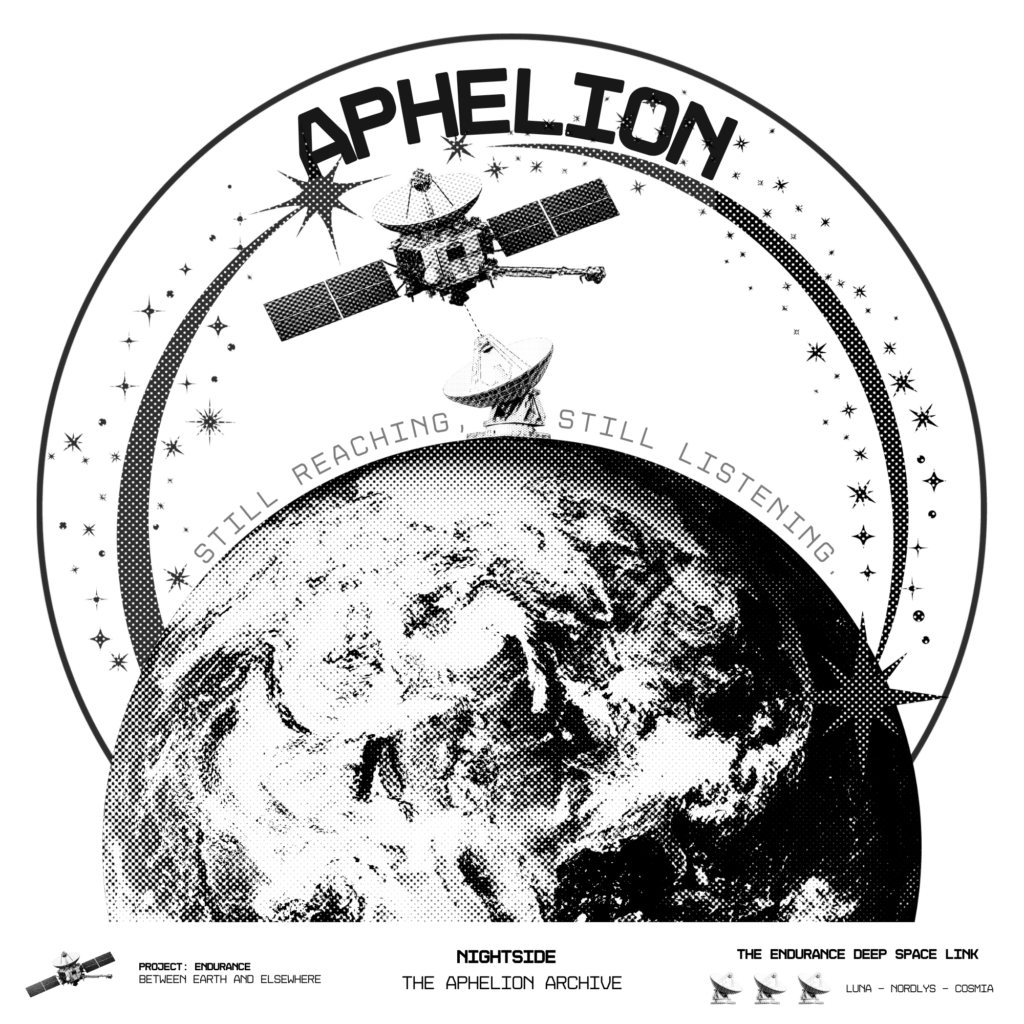
It’s out there, somewhere.
Traveler, meet Aphelion.
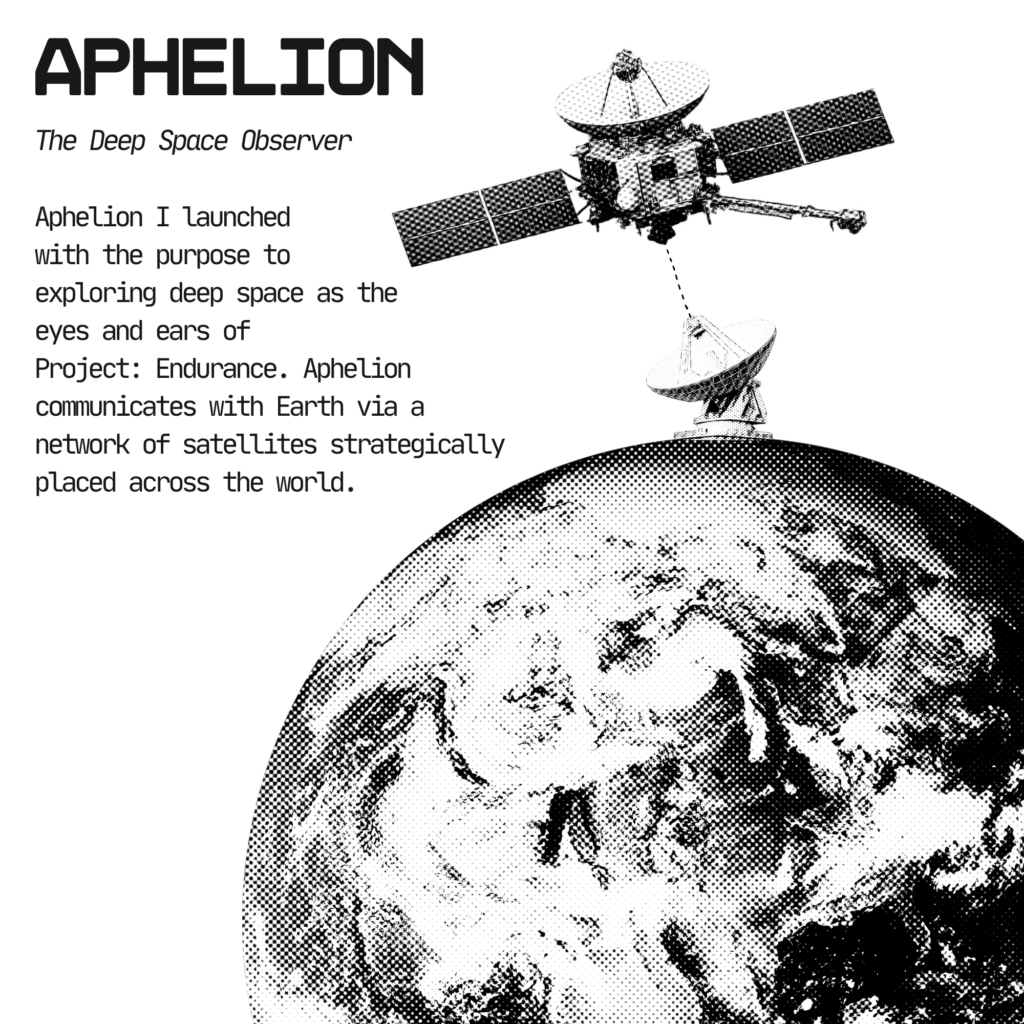
Aphelion I is the fictional interstellar observer of The Archive. Born from humanity’s curiosity to discover what exists beyond our home within the solar system, this deep space probe listens, watches, reports back to Earth, and carries the human spirit into the far reaches of the universe. It is our eyes and ears within among the cosmos and inspires us to learn as much as we can, and question everything.
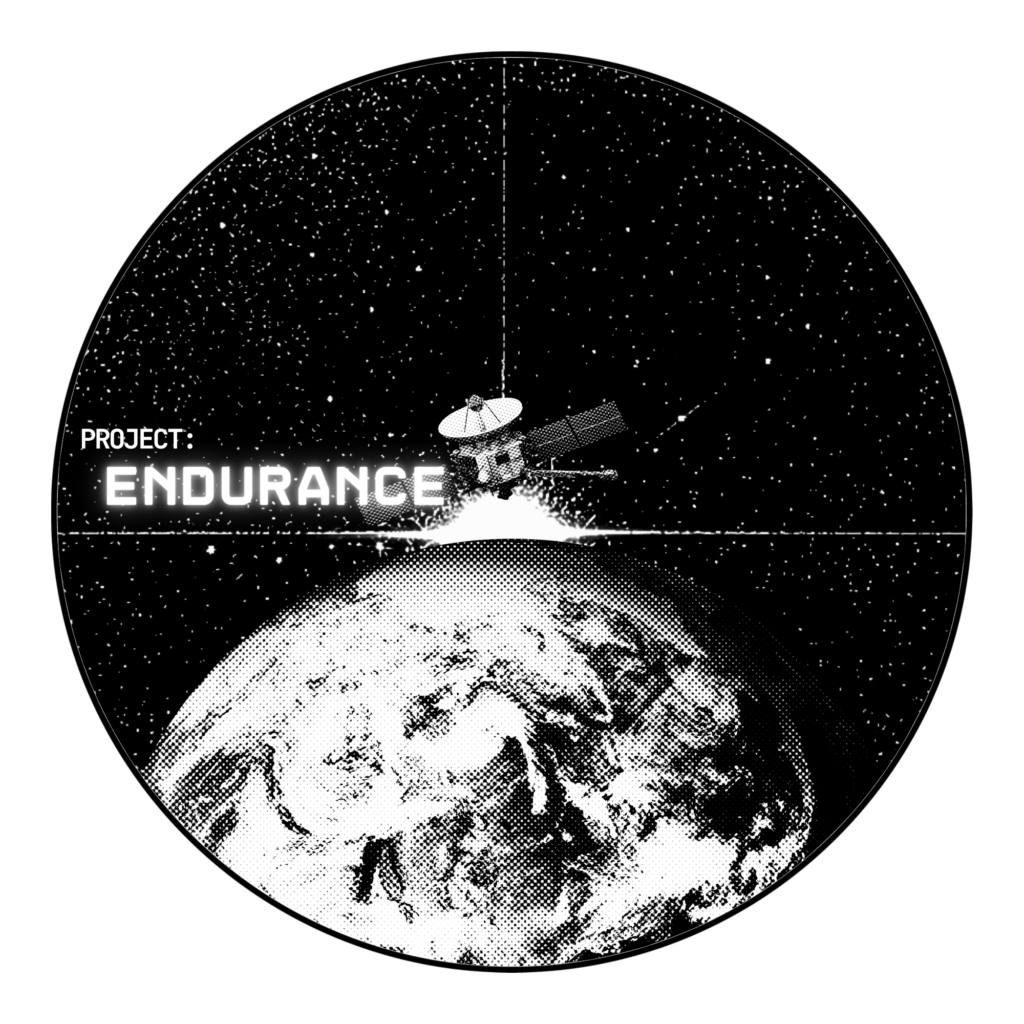
Project: Endurance was created for the purpose of studying deep space with the mission to understand our place in the vast universe. Aphelion I is the first generation of unmanned spacecraft launched by the Project with the intent of observing deep space, relaying the data it encounters, and capturing images of interstellar space. The spacecraft is lighter than anything that’s come before, it can travel faster than anything ever launched, and the technology on board is top tier. The new Command and Data Handling (C&DH) system, affectionately nicknamed “Helion” by mission engineers, gave Aphelion something approaching a mind of its own. They joked that Helion was more than the spacecraft’s brain – it was its soul. At the time, it was just an engineer’s joke.
Much to the excitement of the team, Aphelion I launched successfully without a single issue or delay on a beautiful sunny spring day off the coast of Florida. The most advanced deep space probe was now on its way to explore interstellar space, with an expected travel time of 30 years to the outer edge of the solar system.
Three years in, and the journey was so far, so good. Aphelion had successfully observed our closest celestial neighbors: Mars and Jupiter. But somewhere along the way in the relative proximity to Saturn’s orbit, communication dropped unexpectedly. At first engineers assume the worst: Software failure, sensor malfunction, a navigation error, or a catastrophic system collapse.
46 hours pass between the blackout and restored communications. The scientists couldn’t believe their eyes when the data correlated to a position that could not have been physically possible to reach. The astonishing implied distance exceeded the theoretical range of any human-made spacecraft, or any general understanding of physics.
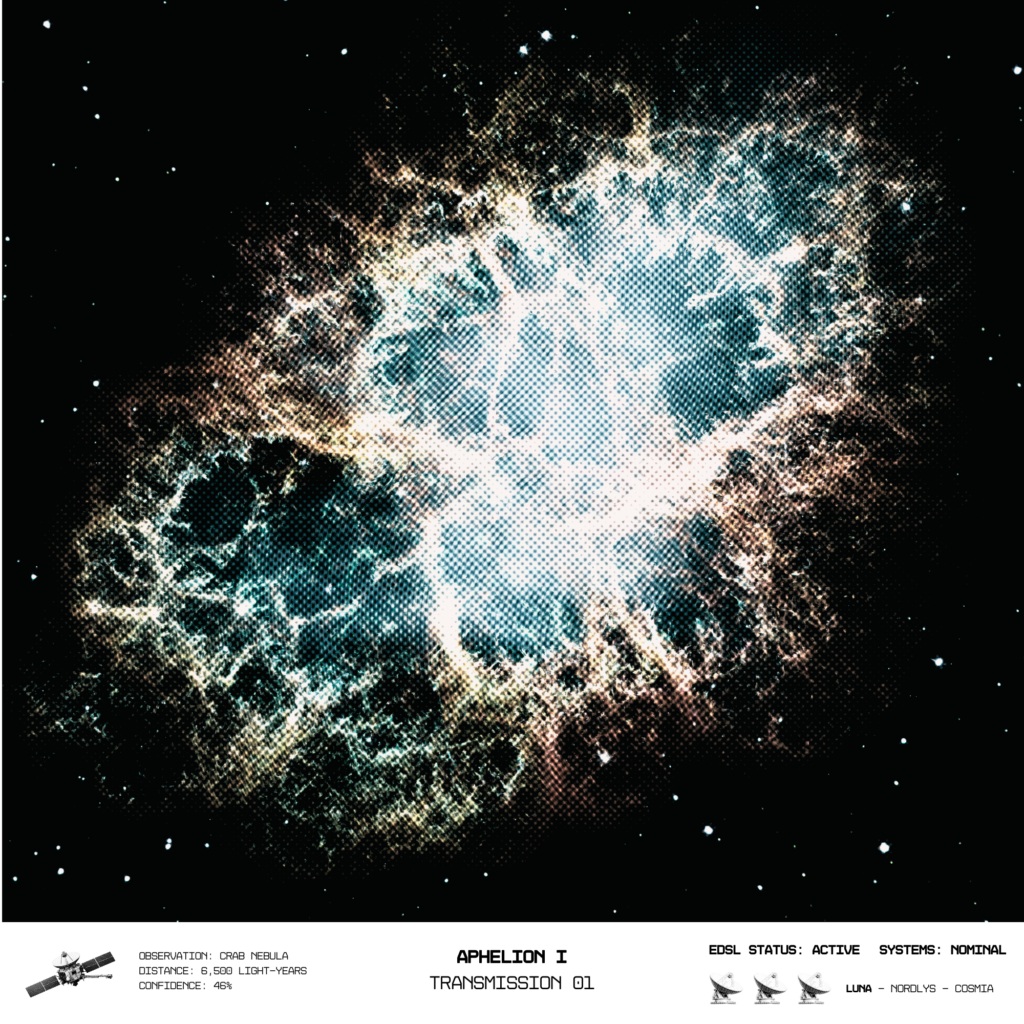
The images arriving show:
The Crab Nebula, located approximately 6,500 light-years away from Earth in the constellation Taurus.
The team assumes corrupted images, mistaken identification, or damaged geospatial data.
They spent weeks working to prove the data wrong: They considered altered telemetry, malicious data injected into the receivers, the instruments onboard misfiring. Every option, they tested. Every possibility, they investigated. Many late nights and emergency meetings over months led scientists to dread that years of planning and engineering were a waste; The mission was feared to be dead.
Only after exhausting all of these possibilities and more did they begin to entertain the impossible explanation.
Months after the phenomenon, astronomers eventually can verify the data with certainty: The observations are real, and they are consistent with a viewpoint near the Crab Nebula.
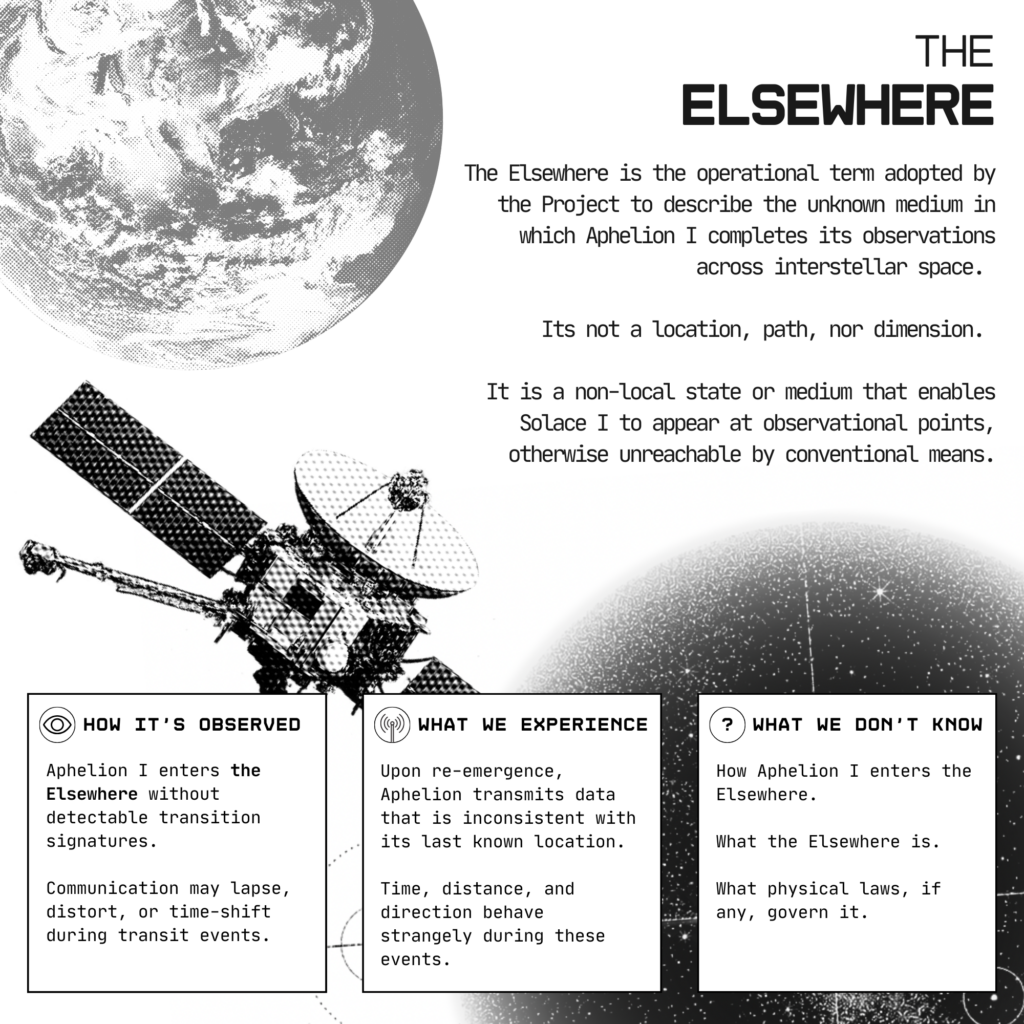
The region of spacetime accessible through non-local transit events is formally designated Elsewhere by the Project: Endurance Council.
Scientists don’t know what The Elsewhere is, even after thorough investigation. There is no plausible explanation within our understanding of physics to rationalize it, but all they know is it exists with certainty and is the proprietary system of travel for Aphelion I.
Where Fact Becomes Fiction
The science, stories, and ideas that inspired Aphelion.
Project: Endurance and the story of Aphelion I is inspired by NASA’s Voyager spacecrafts, with a bit of a mystery and science fiction flair. Launched in 1977, the twin Voyager spacecraft’s mission was to map the giant planets, their rings, and their moons. Between the two, they discovered 22 new moons, active volcanoes on Jupiter’s moon Io, and the structure of Saturn’s rings. Beyond the main objective, their purpose shifted to exploring the edge of the heliosphere (the protective bubble that encapsulates our solar system), and venture into interstellar space. In 2012, Voyager 1 became the only human spacecraft to cross the threshold beyond the solar system into deep space. Voyager 2 crossed that boundary in 2018. Right now, the probes are measuring interstellar data like magnetic fields, particles, and plasma waves. In the event that either spacecraft encounters intelligent life, both spacecrafts are outfitted with a gold-plated copper disc known as The Golden Record carried on both. The cover (as seen below) contains instructions for playing it, where to find Earth, among other important pieces of locational data in case intelligent life intercepts it. The record has greetings in 55 languages, images of life on our planet, sounds of nature, and music from various cultures,
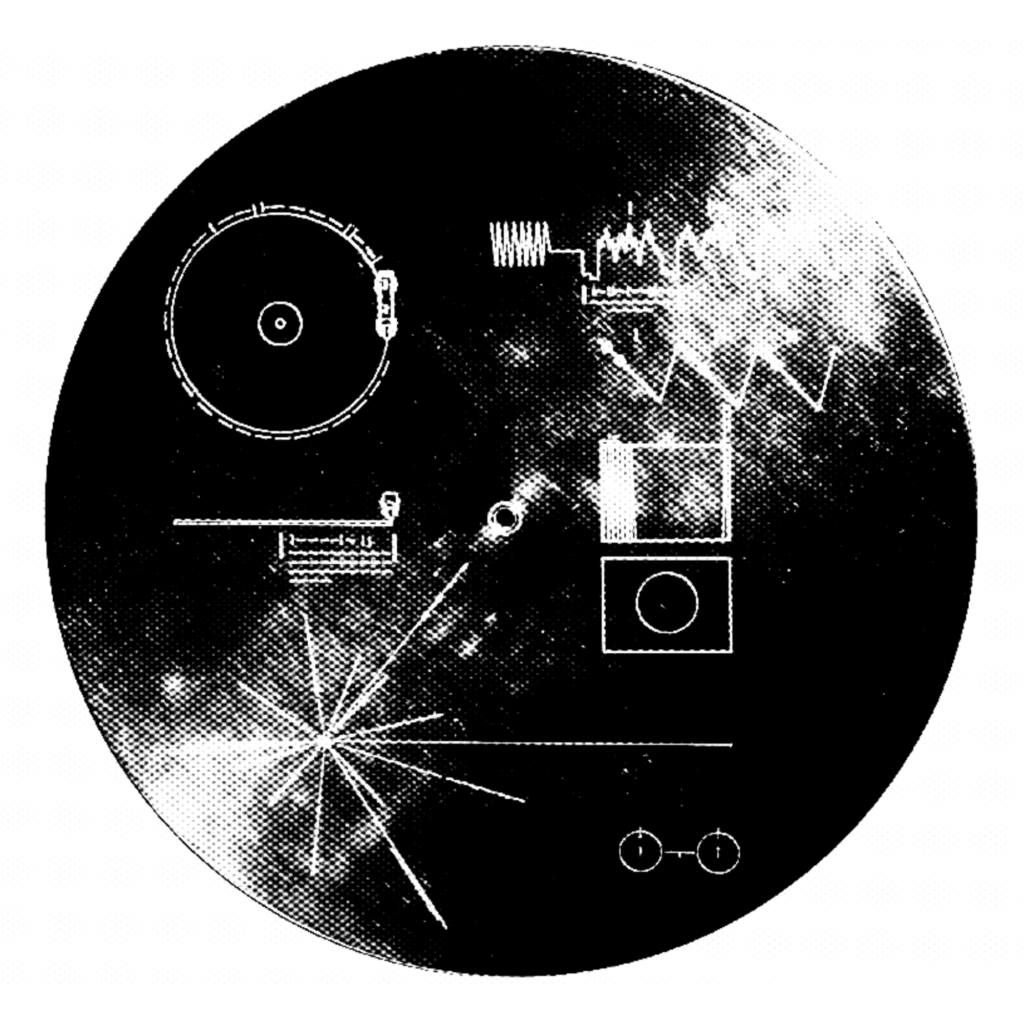
Now, beyond the brink of the solar system, Voyager is our furthest attempt to physically reach whatever else may be out there. Interstellar spacecraft like Voyager are a physical manifestation of the perseverance of the human spirit and the ingenuity of space science and engineering.
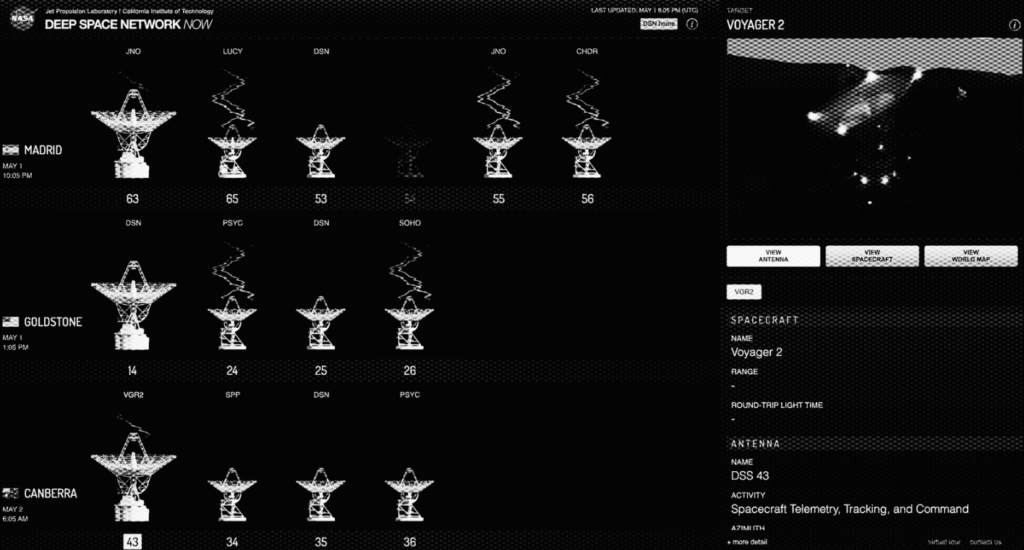
Scientists communicate with deep space satellites primarily using giant radio antennas and high-frequency radio waves. Deep space probes these high-gain antennas to beam data (telemetry, photographs, and scientific readings) back to Earth. NASA’s Deep Space Network (DSN) is an international array of antennas that enable two-way communication, navigation, and tracking for spacecraft. Ever wanted to pretend you’re working mission control? You can see the current state of the DSN by visiting Deep Space Network Now. You can see in real time which antennas are currently tracking, its range, the data speed, and the time-lag to each specific craft. The DSN supports over 100 missions; Key projects including the Artemis missions, the James Webb Space Telescope, Mars rovers, and the Voyager spacecrafts.
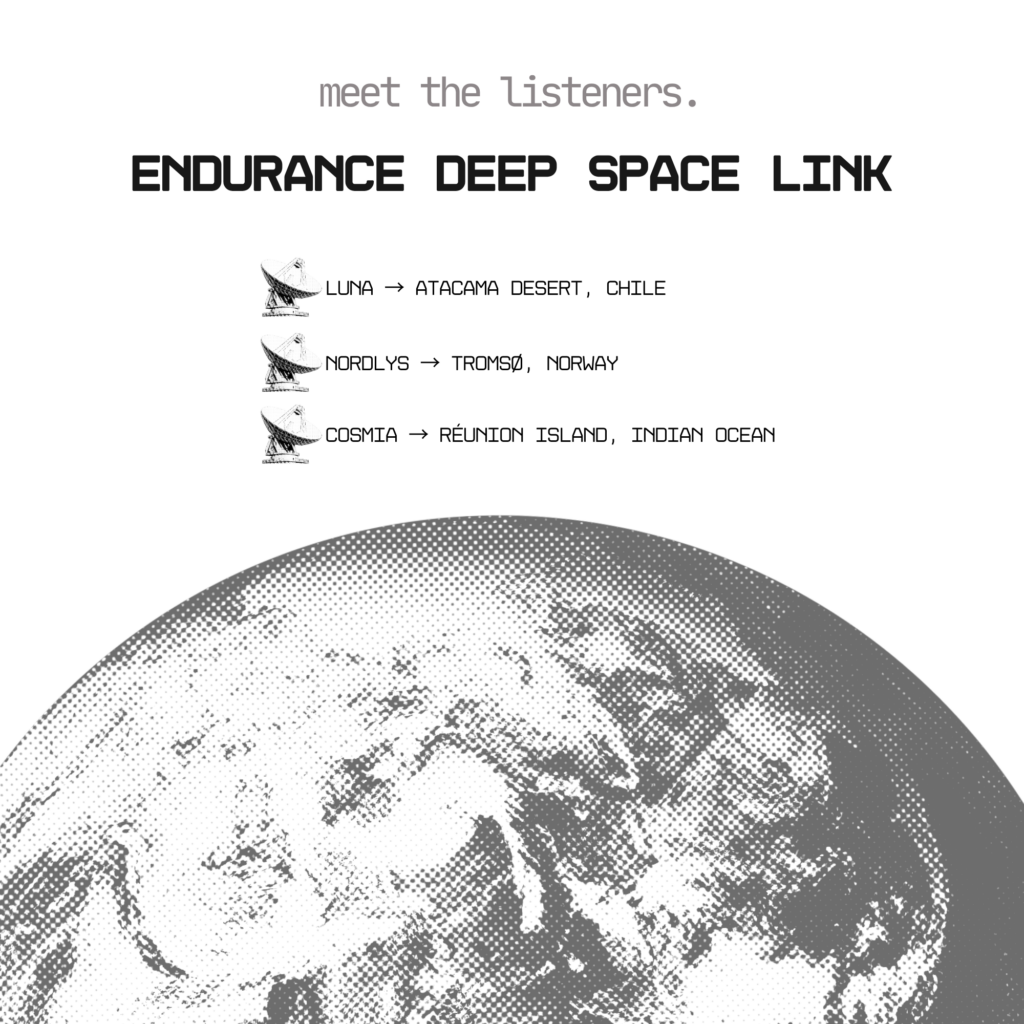
Project: Endurance communicates with Aphelion I through its network, the Endurance Deep Space Link, made up of three antennas:
- Luna -> Located in Atacama Desert, Chile
- Nordlys -> Tromsø, Norway
- Cosmia -> Réunion Island, Indian Ocean
Their job is to be the Earth-based communication and signal recovery system. Situated across the globe, they work together to communicate with Aphelion I in the far reaches of deep space, wherever it chooses to appear.
These machines communicate together to power the brain of Project: Endurance, perpetually learning more about the cosmos as we go and inspiring us to continue to question the universe and our place in it.
Stay curious, and stick around.
Our next discovery may be just around the corner.
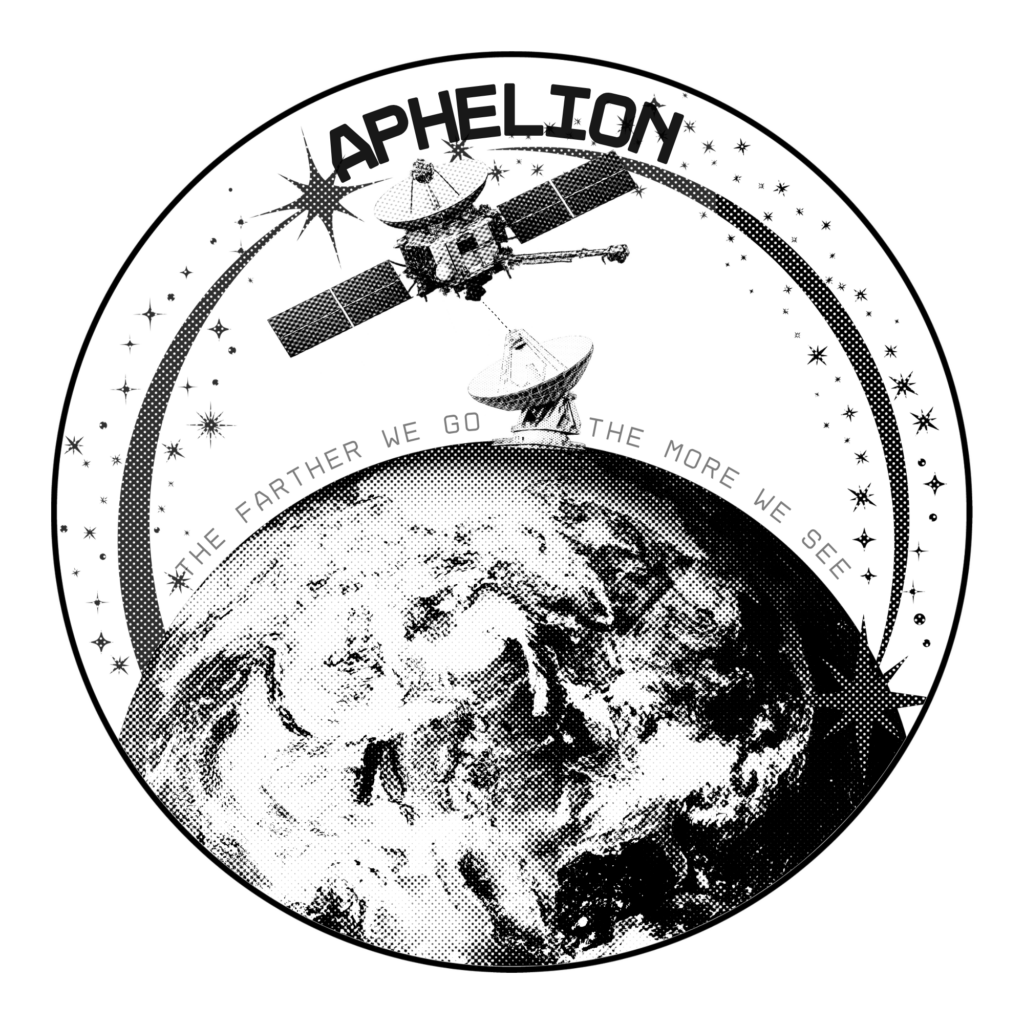
Mission Badge version 1
Mission badge version 2
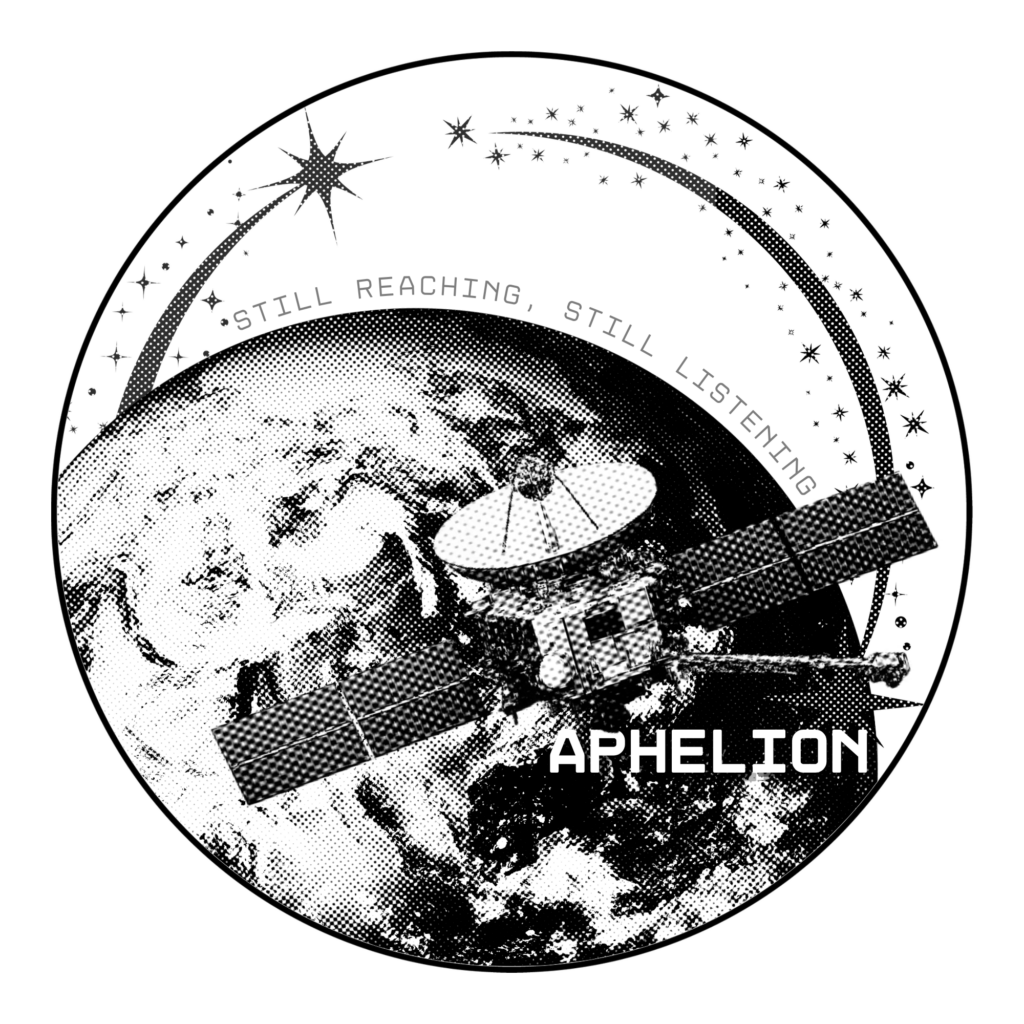
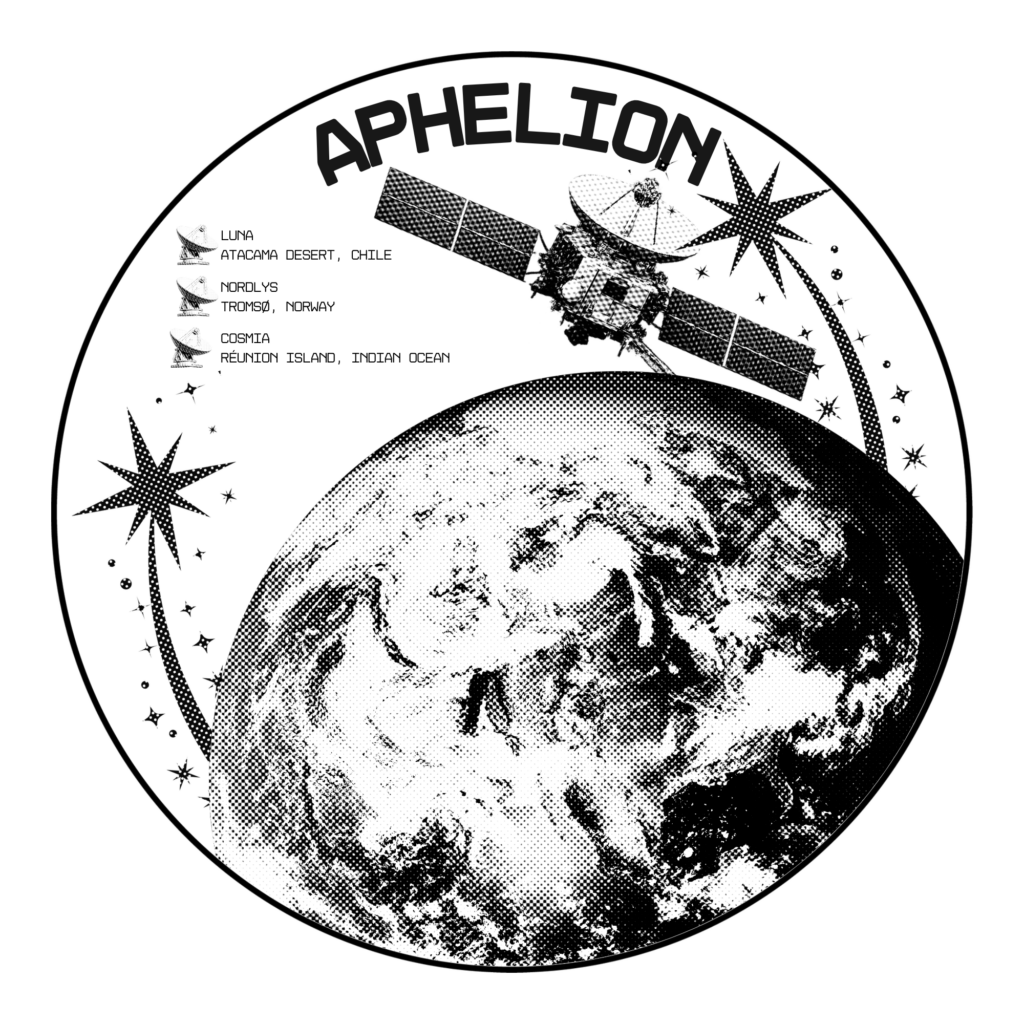
Mission badge version 3
Project: Endurance badge
[01] Voyager Program
[02] Voyager 1 & 2 Mission Overview
[02] Voyager Spacecraft
Nightside Notes
Nightside Notes
The Aphelion Archive
Project: Endurance
Aphelion I
Endurance Deep Space Link
The Elsewhere